
Vanish Designs · Journal
Not Every Room Wants a TV.
How top designers bring big-screen entertainment into elegant rooms, with no trace of tech.
Over the past five years, I’ve had the privilege of walking through some truly extraordinary homes.
And in too many of them, the least beautiful object in the primary living space had become the thing that commanded the room: the TV.
Homes with remarkable architecture.
Beautiful furniture.
Museum-worthy art.
Magnificent fireplaces.
Spectacular views.
And yet the room still had to answer to a TV.
Furniture was positioned with the screen in mind. Sightlines were determined by it. Art, architecture, fireplaces, even great views had to compete with it.
There are plenty of rooms where a television makes perfect sense. But there are also rooms where a television asks too much.
It asks the furniture to face it.
It asks artwork to move somewhere else.
It asks beautiful views to become secondary.
And even when it’s turned off, it remains the room’s most visually dominant object.
The problem isn’t what televisions do when they’re on. It’s what they do to rooms when they’re off.
When the View Stops Being the Focal Point
One apartment has stayed with me.
Floor-to-ceiling windows overlooking Central Park.
Beautiful furniture. Museum-worthy art. Extraordinary architecture.
Yet every sofa and chair faced away from the view and toward the one interior wall with the TV.
Standing there, I couldn’t help wondering what the architect had envisioned. I doubt it was this.
I’ve seen the same thing in Connecticut waterfront homes. People spend a fortune buying spectacular views. Then they arrange the room so everyone looks the other way. That has always struck me as backwards.
The Compromises We Accepted
For decades, we accepted these compromises because there was no better alternative. If you wanted immersive home entertainment, you either mounted a big TV on a wall or built a home theater or media room.
So televisions migrated into living rooms. Above fireplaces. Onto walls that once displayed art. Into rooms they were never meant to be.
The TV above the fireplace may be the best example. It’s often mounted too high for comfortable viewing. If there’s a fire burning, two bright focal points compete for attention. And it forces one of the home’s important architectural features to become just a backdrop for technology.
TVs Shape Behavior
Televisions beckon. Even when they’re off.
They quietly suggest that perhaps something should be on. The news. A ballgame. Background noise.
It would be wonderful for viewing to become intentional again.
Watching the Wimbledon final because you’ve been looking forward to it. Inviting friends over for the World Cup. Planning a movie night.
Those experiences feel fundamentally different from simply filling silence.
The design of a room and the objects in it shape how that room gets used.
A library invites reading. A dining room prompts conversation. A room with beautiful views draws our gaze outside.
Shouldn’t our most beautiful rooms encourage us to appreciate architecture, art, and people, without directing our attention toward a TV?
Returning the Room to Itself
The good news is we no longer have to choose between immersive entertainment and a well designed room.
Vanish Designs has spent the past years developing luxury credenzas, window seats, dressers, and console tables, which can be tailored to fit any interior. Each piece discreetly conceals an immersive entertainment system, combining a Laser TV (UST), a motorized rising screen, and immersive audio.
When off, there is no trace of technology. The room remains just as it was intended.
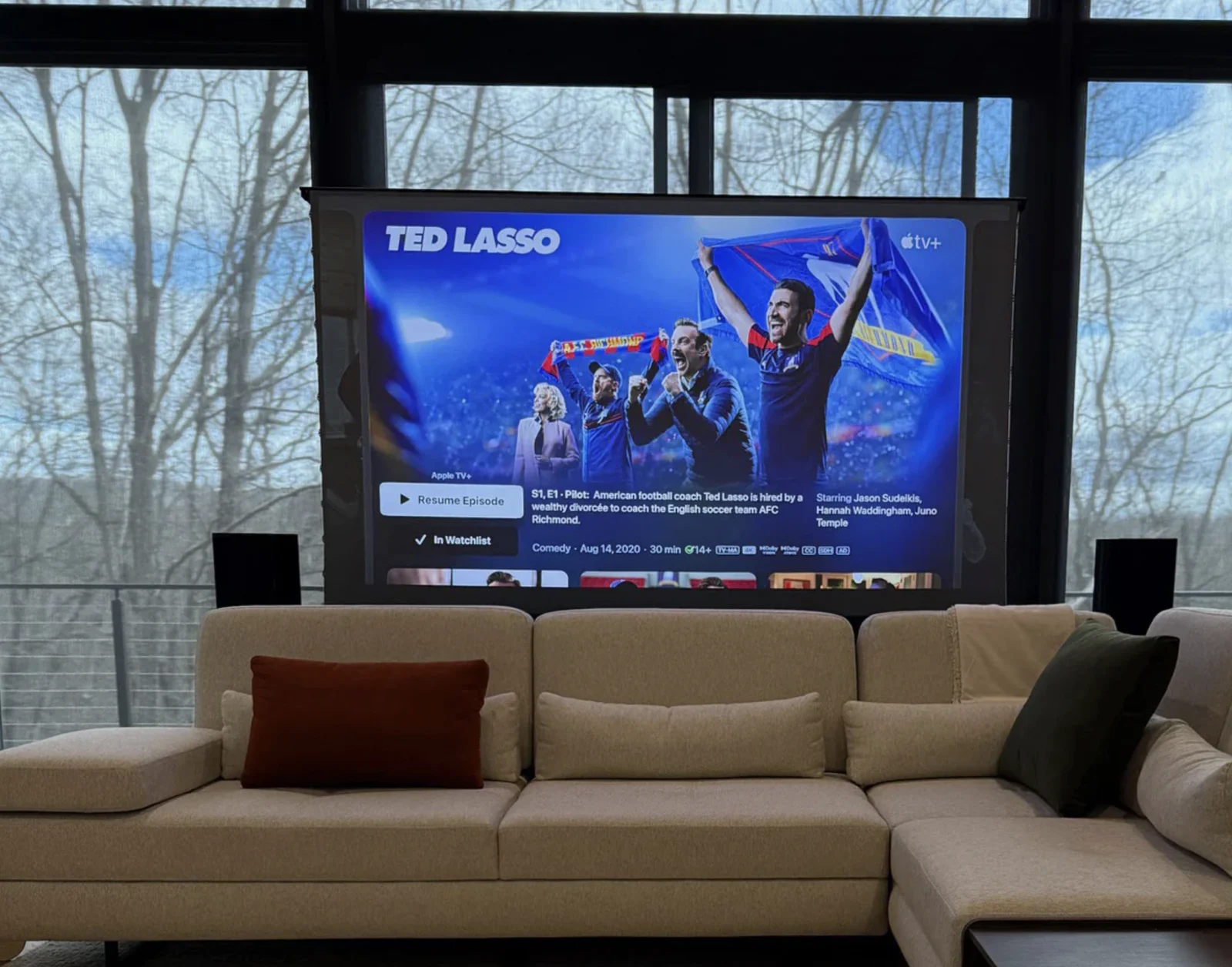
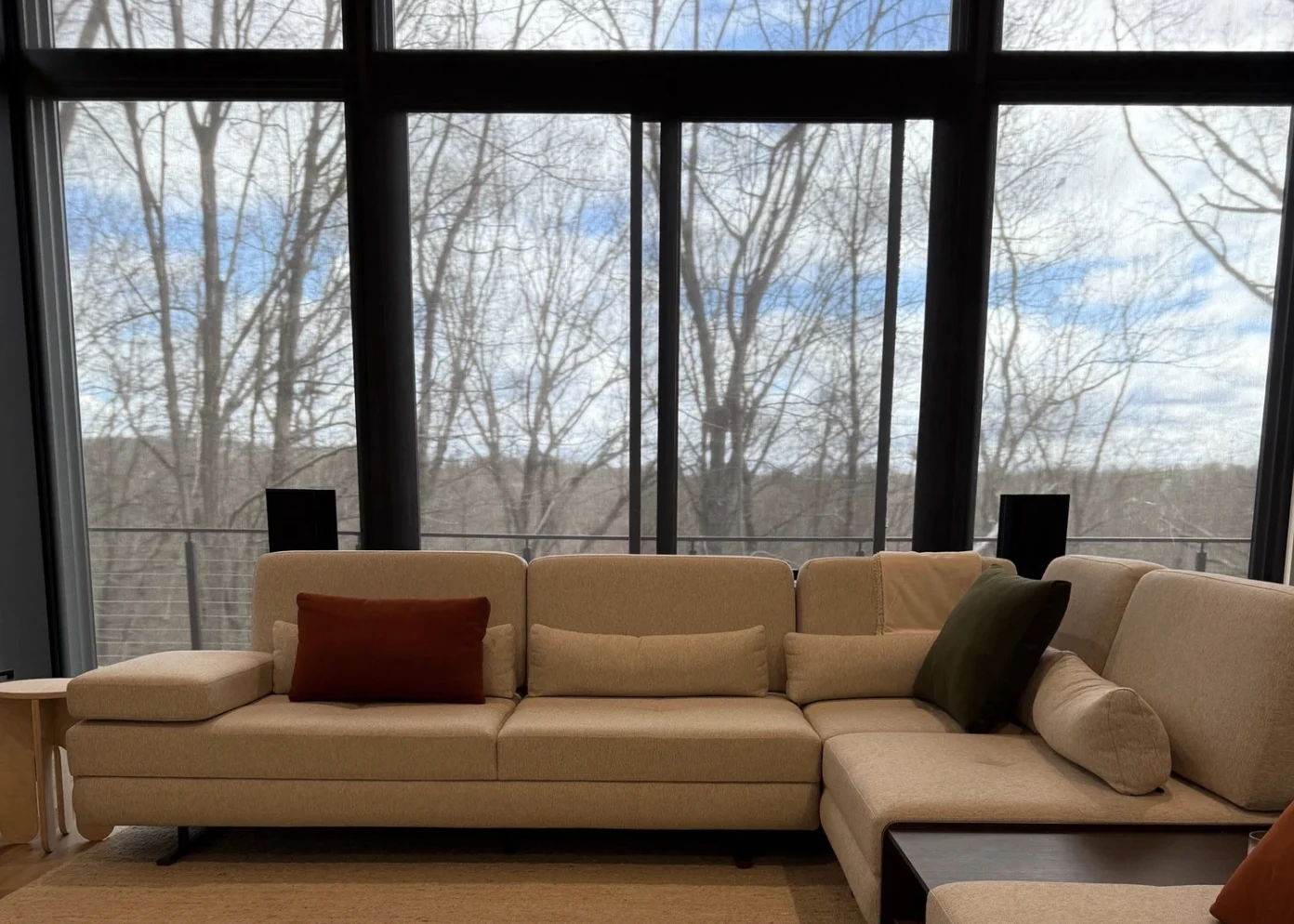
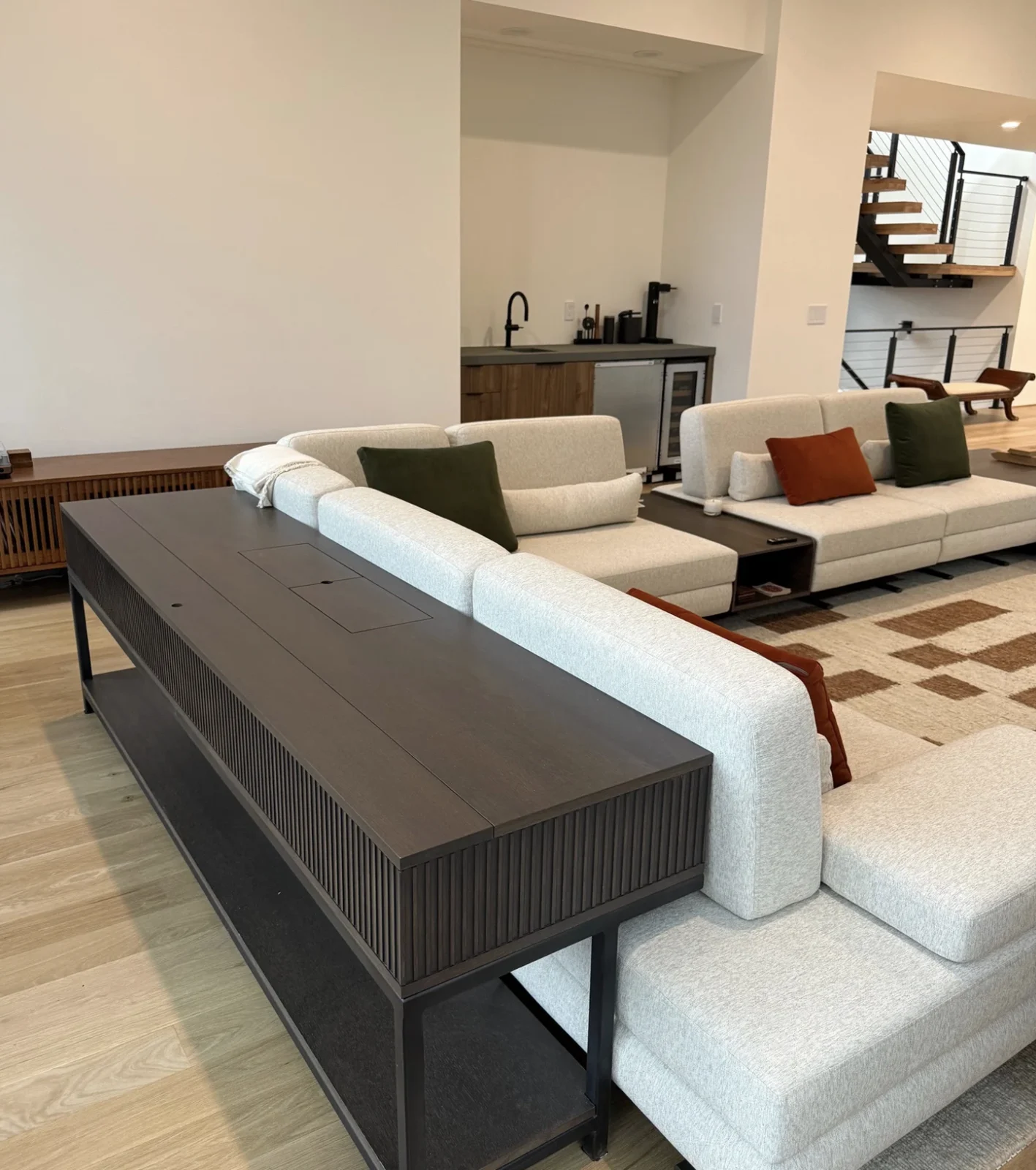
In rooms with floating seating, the Hudson Table functions as a sofa table while concealing a large motorized screen. It is ideal for rooms with opposing sofas, an arrangement that encourages face-to-face conversation and gives everyone easy access to the coffee table.
Floating seating is common in generously proportioned rooms, heavily windowed apartments, and spaces designed around views. In these spaces, the seating is often disconnected from walls, making a wall-mounted TV impractical.
The Hudson Sofa Table changes that. When it’s time to watch something, the screen rises quietly from behind one sofa, ideally positioned for those seated opposite or in occasional chairs elsewhere in the room. The room can be arranged around the architecture, the views, and the way you want to live - not around a TV.
And while the sofa in front of the sofa table won’t have a view of the screen, that’s rarely a practical limitation. Unless you routinely have more than eight people watching together, the opposite sofa and occasional chairs will provide all the seating you need.
This is particularly valuable in rooms with a fireplace. Rather than mounting a television above the fireplace and craning your neck to watch a screen that is too high, you can sit comfortably on the sofa and look straight ahead at an immersive screen behind the opposing sofa, with the fireplace visible off to the side.
This isn’t simply a viable alternative to a television over the fireplace - it is a much better solution.
And when the screen disappears, the Hudson Table is simply a beautiful piece of furniture that can be adorned with pictures, flowers and decorative objects. Nothing about it suggests that an immersive large-screen experience is concealed inside.
Our Crosby Credenza allows an elegant credenza to become the room’s focal point while discreetly concealing spectacular large-screen viewing and immersive sound, such as the 110” display and Sonos Arc Ultra shown below.
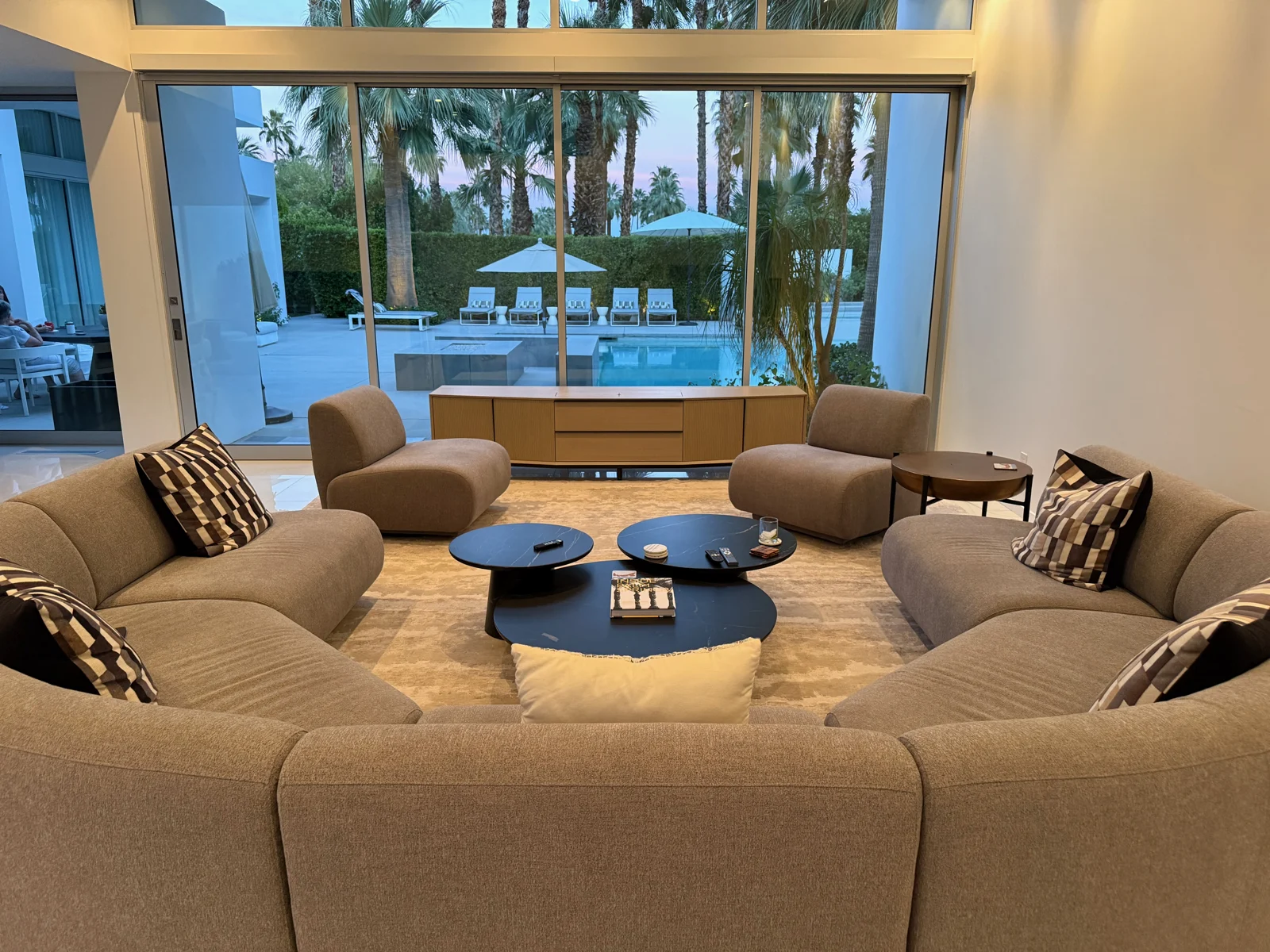
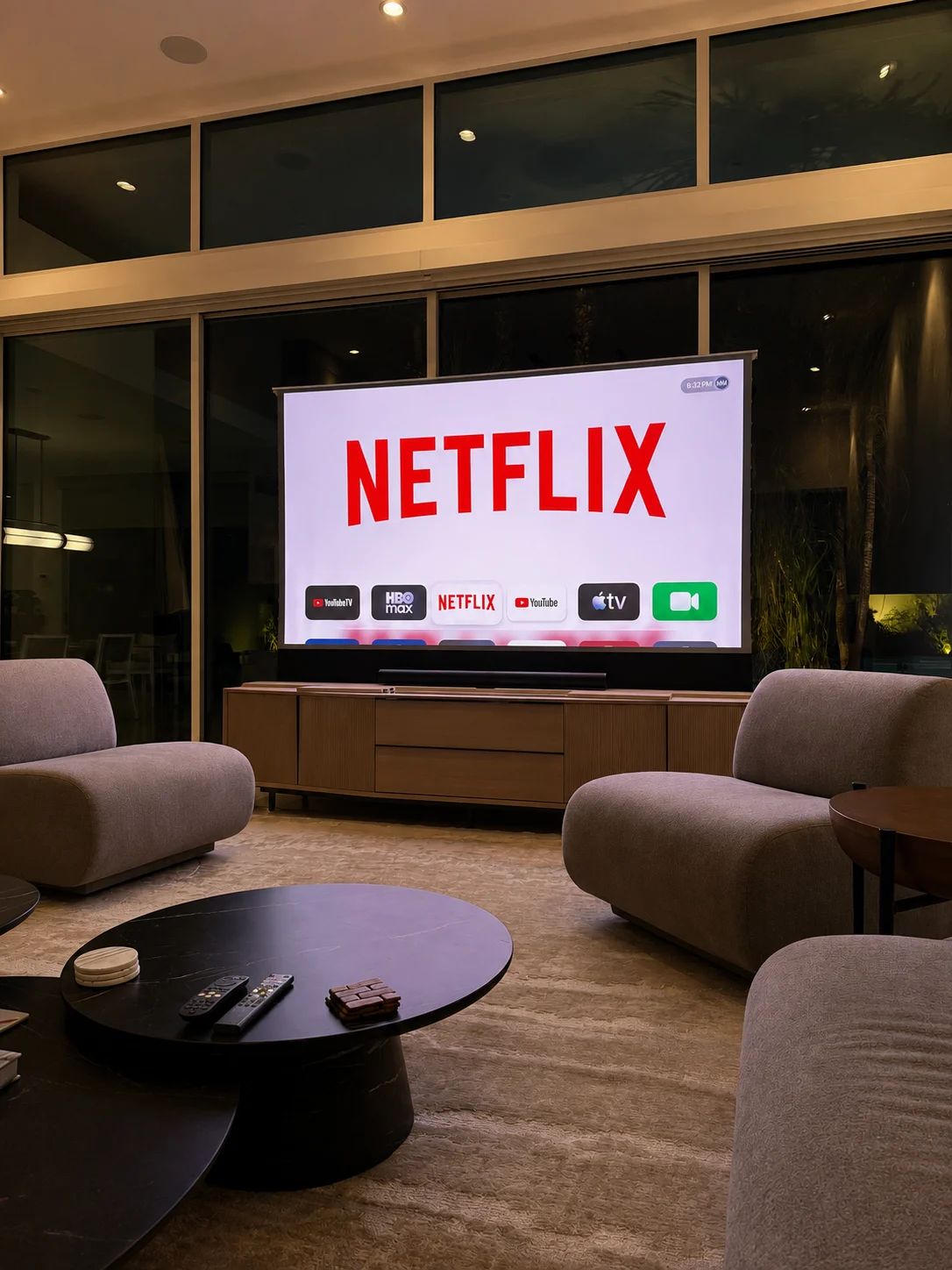
Whether the screen magically rises from behind a sofa or from a custom credenza, the philosophy is the same. The entertainment appears only when it’s wanted.
And when it’s over, the room becomes itself again, with no trace of tech.
That may be the real promise of this ascending technology: allowing for captivating big-screen entertainment one moment, and beautiful interiors, art, views, or face-to-face conversation with the next.
Because technology is at its best when it expands what a room can be, not when it defines what a room must be.
The next time someone asks, “But where does the TV go?” - send them this.